Witchcraft Tools: Athame, Wand, Chalice, Pentacle & More
The tools of witchcraft are not decorative. Each one is a focused instrument that extends the practitioner's will, marks the boundary between ordinary and sacred space, and corresponds to an element, a direction, and a force in the architecture of magic. This is what they are, what they do, and how to begin working with them.
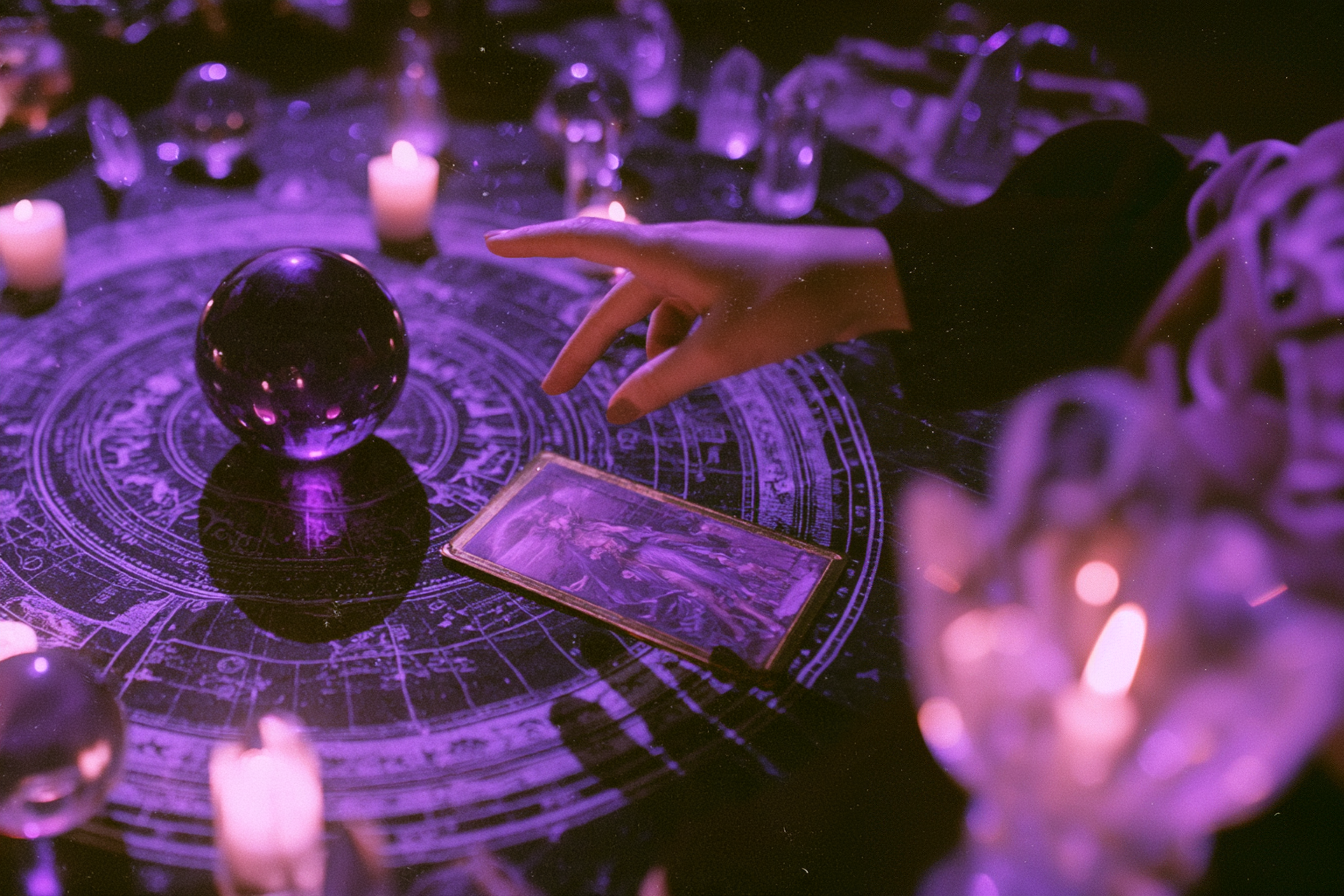
The four primary witchcraft tools correspond to the four elements: athame (Air or Fire) directs energy and casts circles, wand (Fire or Air) channels and invokes, chalice (Water) holds ritual drink and receptive energy, pentacle (Earth) grounds and manifests. Additional tools include the cauldron, broom, candles, and cords.
- The four elemental tools and their specific ritual functions
- How the athame differs from a bolline
- Choosing and making your own wand
- Additional tools: cauldron, broom, candles, cords, bell
- How to consecrate a tool before first use
- Which tools to start with as a beginner
The Four Elemental Tools
In Wicca and much of Western witchcraft tradition, the four primary tools correspond to the four classical elements. The correspondence varies by tradition — particularly for the athame and wand, which some traditions assign to opposite elements — but the functions remain consistent.
The Athame in Depth
The athame is arguably the most iconic witchcraft tool — and the most misunderstood outside of practice. Its function is exclusively energetic and ritual, not physical. The black handle traditionally distinguishes it from the bolline (a white-handled curved knife used for physical tasks: cutting herbs, cords, and carving candles).
In circle casting, the athame is pointed outward and walked deosil (clockwise in the Northern Hemisphere) to trace the circle's boundary, projecting the practitioner's will and energy in a line that defines sacred space. It is then used in reverse (widdershins — counterclockwise) to close the circle and release the energy at the working's end.
Some traditions forbid the athame from ever touching the ground; others keep it exclusively on the altar when not in active use. If you feel called to work with an athame but are concerned about handling a blade, some practitioners work with a black-handled letter opener or a wooden replica instead — the energy direction function is identical.
The Wand
Wands are among the oldest magical tools in human history, appearing in Egyptian magical practice, the Greek magical papyri, and throughout the grimoire tradition. The function is consistent: directing and amplifying the practitioner's energy outward.
Traditional wand length is "from elbow to fingertip" — which creates a tool uniquely sized to the practitioner's body. Many witches make their own wands from foraged wood, selecting wood from a tree with which they have a felt connection or whose traditional correspondences match their practice. The wood is typically stripped of bark, sanded smooth, and finished with oil or wax. Crystals, symbols, and wrappings may be added over time.
Wand woods and their primary correspondences: oak (strength, longevity, the sacred king), hazel (wisdom and divination), ash (the World Tree, communication between worlds), hawthorn (the Faerie boundary), rowan (protection from enchantment), willow (the Moon and water magic), apple (love and the Otherworld), elder (the Crone and the veil).
The Chalice
The chalice's role in ritual centers on the symbolic and literal reception of the divine. In the Great Rite — the symbolic union of the God and Goddess representing the generative force of creation — the athame (masculine, projective) is lowered into the chalice (feminine, receptive), blessing the wine within. This symbolic act is then followed by drinking from the chalice, receiving the blessing into the body.
Outside of formal ritual, the chalice can be used to hold moon water, to offer libations to deities and spirits, and as a scrying vessel when filled with still, dark water or ink. Any cup can serve as a chalice — silver is traditional, but ceramic, glass, or any vessel that feels right is appropriate.
The Pentacle
The pentagram — a five-pointed star drawn in one continuous line — is one of the oldest magical symbols in continuous use. The five points traditionally represent the four elements (Earth, Air, Fire, Water) plus Spirit, with the upward-pointing star placing Spirit in ascendance. The circle that surrounds it in the pentacle represents wholeness, the cycle, and divine perfection.
The pentacle disc is used as a surface for charging — placing objects, crystals, or written spells upon it to receive Earth's grounding and manifesting energy. It is also used to bless and charge the salt and water used in circle casting.
Additional Tools
The Cauldron
Iron cauldrons are used for burning — herbs, petition papers, incense — and for brewing, scrying, and as a symbol of the Goddess's transformative womb. Even a small cauldron-shaped iron dish serves the function. Fire-safe and stable, iron is traditional for its associations with Mars, strength, and protection.
The Besom (Broom)
The besom is used to sweep the ritual space clean before circle casting — not physically, but energetically. The act of sweeping counterclockwise before ritual clears accumulated energy from the space. The besom is not traditionally ridden (that is later folklore) but stands at the door as a protective tool and boundary marker.
Candles
Candles serve both as elemental fire representations and as spell tools in their own right. Candle magic is one of the most accessible and effective forms of sympathetic magic, using color, anointing, carving, and burning time as variables in the working.
Cords and Bells
Cords are used in knot magic — tying knots to bind intention — and in some initiatory traditions for binding and measuring. A bell is rung to signal the beginning and end of ritual, to dispel stagnant energy, and to call in spirits and deities.
Consecrating a Tool
Before first use, a tool is cleansed of any previous energetic impressions and dedicated to magical work. The process: cleanse the tool (smoke, salt, moonlight, or running water), hold it in both hands, ground and center, and state clearly its purpose and your intention for it. Many practitioners consecrate under a full moon, incorporate the four elements in the consecration rite, and store the tool wrapped in cloth afterward to preserve its charge.
After consecration, tools work best when handled primarily by the owner. Curious guests at the altar are better redirected to look rather than touch.
Starting Out: What You Actually Need
You need nothing to practice witchcraft. The tools are aids, not requirements. That said, if you are building a practice and want to invest in tools gradually: a candle and something to write with will carry you through most workings. The altar itself is more essential than any single tool on it — the altar is the designated space; the tools are what you place there.
Catalog Your Tools in Incantara
Log each tool in your practice — record its material, acquisition, consecration date, and how it functions in your workings. Incantara builds a full picture of your practice over time, so you can see how tools develop alongside your craft and what combinations feel most effective.
Open Incantara