Wicca for Beginners — A Complete Starter Guide to Wiccan Practice
Wicca is one of the fastest-growing religious traditions in the world — a modern pagan path built on reverence for nature, the practice of magic, and an ethical framework that asks only that you cause no harm. This guide covers everything a beginner needs: what Wicca actually is, its core beliefs, the eight Sabbats, the tools, the ethics, and how to begin practicing right now.
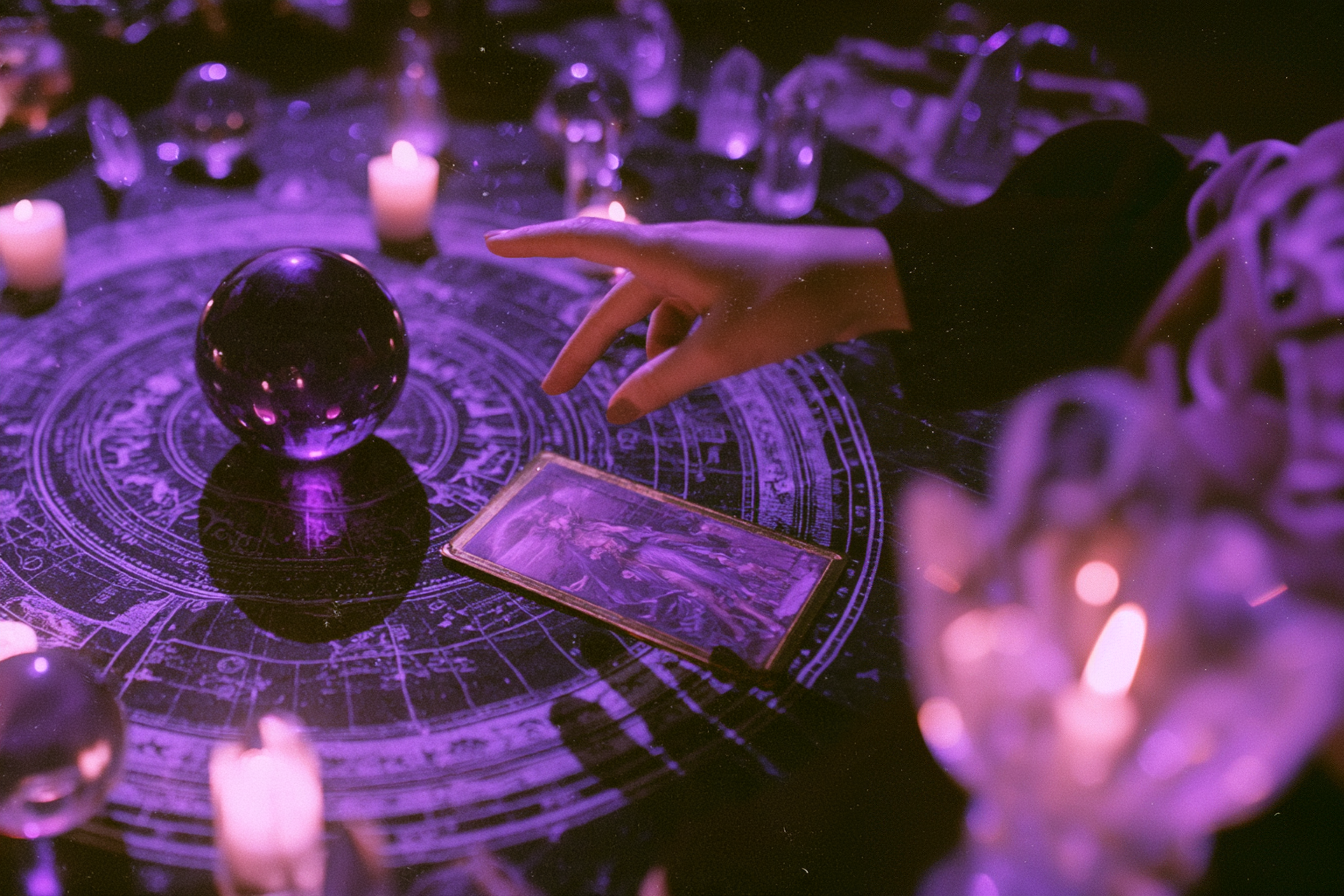
Wicca is a modern pagan religion founded by Gerald Gardner in the 1950s. It centers on nature reverence, the worship of a Goddess and God, the practice of magic, and observance of eight seasonal Sabbats. The central ethic is the Wiccan Rede: "An it harm none, do what ye will." You can practice as a solitary witch — no coven required.
- Wicca is a formal religious tradition, distinct from "witchcraft" broadly — though many Wiccans also identify as witches
- The Wiccan Rede and Threefold Law form the ethical foundation of the practice
- Eight Sabbats mark the seasonal cycle; thirteen Esbats (full moons) punctuate the month
- Solitary practice is fully legitimate — most Wiccans today practice alone
What Is Wicca?
Wicca is a modern pagan religious tradition formally introduced to the public by Gerald Gardner in the 1950s through his books Witchcraft Today (1954) and The Meaning of Witchcraft (1959). Gardner claimed to have been initiated into an existing witch coven in the New Forest, England, though the degree to which Wicca represents a continuous ancient tradition versus a 20th-century synthesis of older magical currents remains debated by scholars and practitioners alike.
What is not debated is that Wicca is now a fully established religious tradition, legally recognized as such in many countries, with millions of practitioners worldwide. Its core elements — nature reverence, the Goddess and God, the Wheel of the Year, the Wiccan Rede, the working of magic — are consistent across its many branches and sects.
Wicca is not Satanism, not devil worship, and has no connection to the Christian concept of evil. It is an earth-centered religion that predates Christianity in its spiritual roots and draws heavily from pre-Christian European traditions, though its specific liturgical form is modern.
Core Beliefs
The Goddess and God. Wicca is typically duotheistic — it honors a Goddess representing the feminine divine principle and a God representing the masculine. The Goddess is often associated with the Moon and the cycles of nature; the God with the Sun and the forest. Many Wiccans understand these not as literal beings but as archetypal forces; others relate to them as genuine divine personalities.
The Wiccan Rede. "An it harm none, do what ye will." This is the central ethical statement of Wicca. It is not a simple "do whatever you want" — it asks practitioners to be conscious of harm in its many forms, including to oneself. It frames ethical decision-making as personal responsibility rather than adherence to commandments.
The Threefold Law. Also called the Rule of Three, this principle holds that whatever energy a person puts into the world — positive or negative — returns to them three times over. It is the magical equivalent of karma and reinforces ethical behavior in spellwork.
Magic. Wiccans practice magic as a natural art of focusing intention and directing energy toward goals. Magic in Wicca is not supernatural in the Hollywood sense — it is understood as working with natural forces and the practitioner's own will. Spells, rituals, and magical tools are the technology of this practice.
Nature as sacred. Wicca holds the natural world as inherently divine. The seasons, the Moon, the elements — earth, air, fire, and water — are all sacred presences to be honored and worked with. This ecological spirituality is a defining feature that distinguishes Wicca from many mainstream religions.
The Wheel of the Year: Eight Sabbats
Wiccans observe eight Sabbats — seasonal festivals marking the cycle of the year. Four are solar (the solstices and equinoxes) and four are "cross-quarter" days falling between them.
- Samhain (October 31) — the Wiccan new year; the veil between worlds is thinnest; honors ancestors
- Yule / Winter Solstice (~December 21) — the longest night; rebirth of the Sun; hope in darkness
- Imbolc (February 1–2) — first stirrings of spring; associated with Brigid; purification and new beginnings
- Ostara / Spring Equinox (~March 21) — balance of light and dark; fertility; new life
- Beltane (May 1) — height of spring; fire festivals; sacred union of Goddess and God
- Litha / Summer Solstice (~June 21) — peak of the Sun's power; abundance; celebration
- Lughnasadh / Lammas (August 1) — first harvest; gratitude; the beginning of decline toward winter
- Mabon / Autumn Equinox (~September 21) — second harvest; balance; preparation for the dark half of the year
Between Sabbats, many Wiccans also observe the thirteen Esbats — full moon rituals for charging tools, divination, and workings that require the heightened energy of the full moon.
Wiccan Tools
Traditional Wicca uses a set of ritual tools, each representing one of the four classical elements. The athame (ritual knife) represents air or fire depending on the tradition and is used to direct energy, cast circles, and invoke the quarters. The wand represents fire or air and is used to invite deities and direct working energy. The chalice represents water and holds wine or water during ritual. The pentacle (a disc inscribed with a five-pointed star) represents earth and is used to consecrate objects placed upon it.
Other common tools include a cauldron for fire and transformation workings, a broom (besom) for cleansing sacred space, candles corresponding to the four quarters, incense as an air/fire correspondence, and a Book of Shadows for recording all magical work.
No tools are required to begin. Many practitioners work for years with only candles and their own focused intention before acquiring formal tools.
How to Start Practicing Wicca
Read widely. The major foundational texts — Scott Cunningham's Wicca: A Guide for the Solitary Practitioner, Raymond Buckland's Complete Book of Witchcraft, and Starhawk's The Spiral Dance — represent different approaches and are worth reading all three. Cunningham is essential for solitaries.
Begin observing the Sabbats. You don't need tools, an altar, or a coven. Light a candle on the Sabbat dates, acknowledge the season, and sit with the energy of the turning year. The practice of attentiveness to seasons is itself Wicca.
Start a Book of Shadows. Record what you learn, what you observe, what resonates and what doesn't. This becomes the foundation of your personal practice.
Work with the Moon. Full moon workings are traditional and powerful. Charge crystals, do divination, set intentions. New moons are for new beginnings. Waxing moon for attraction; waning for release.
Incantara includes a full Sabbat calendar, moon phase tracker, ritual journal, and Book of Shadows — everything you need to begin and sustain a Wiccan practice, organized and private on your device.
Try Incantara Free →Solitary vs. Coven Practice
Most Wiccans today practice as solitaries — alone, without formal initiation into a coven lineage. This was not always accepted; in early Gardnerian Wicca, coven initiation was considered essential. The publication of Scott Cunningham's Wicca: A Guide for the Solitary Practitioner in 1988 formalized and legitimized solitary practice for a generation of practitioners who had no access to covens.
Covens offer structured learning, group ritual energy, and in lineage traditions (Gardnerian, Alexandrian) an unbroken chain of initiatory transmission. For practitioners who have access to a reputable coven and desire that structure, coven work can be profound. But it is not required, and it is not for everyone. The vast majority of practicing Wiccans today are solitaries.
Frequently Asked Questions
Common questions about starting Wiccan practice.