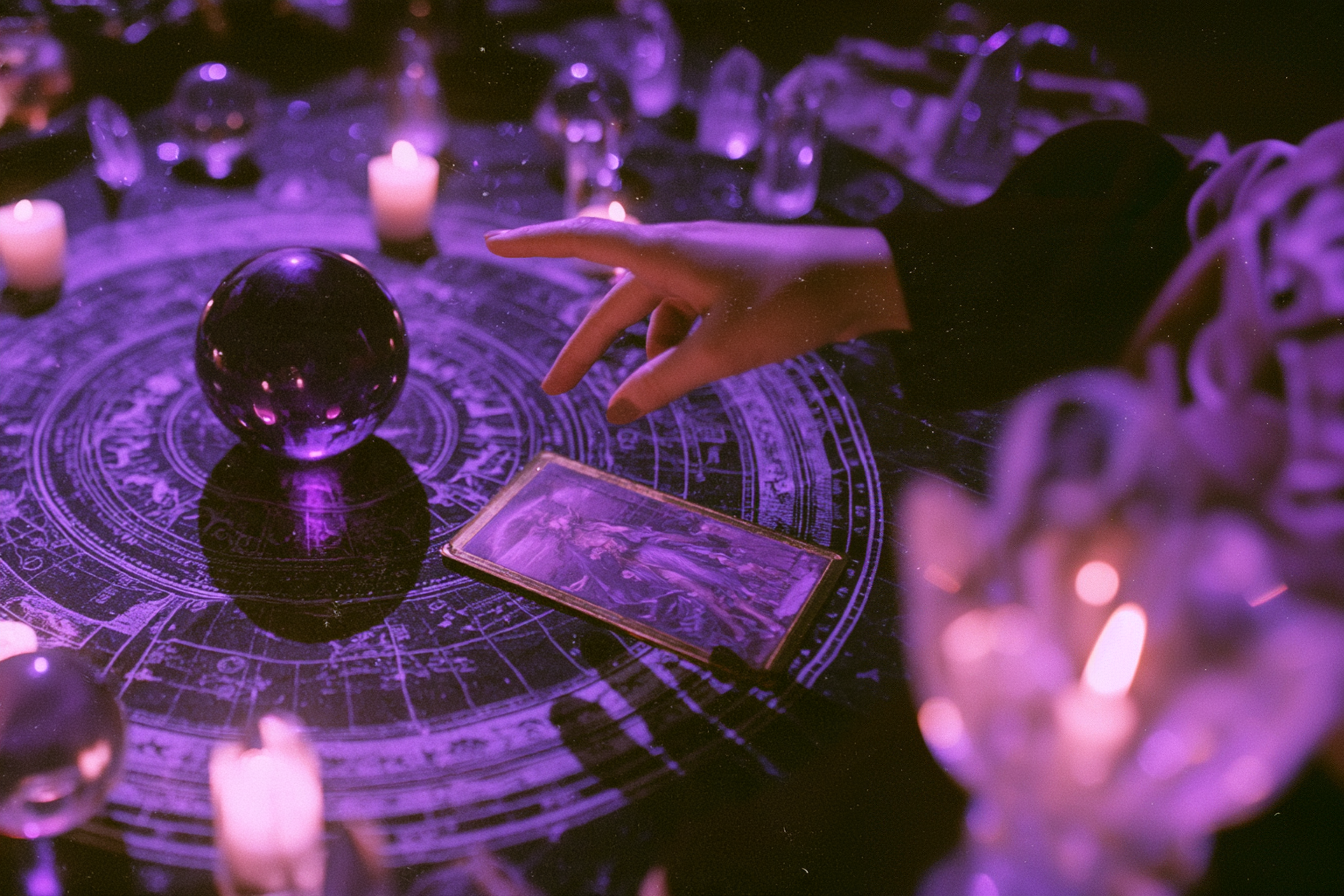
What incantations actually are
The word incantation comes from the Latin incantare — to sing into, to enchant, to work magic upon through song. The same root gives us enchant, chant, and cantata. The name of the app you are reading about — Incantara — carries the same etymology.
An incantation is specifically the spoken or chanted verbal element of a magical working. It may be the entire working (a charm spoken over a wound, a prayer spoken at a threshold), or it may accompany physical operations (candle burning, knotting, sigil drawing, herb preparation). What distinguishes it from ordinary speech is intention and form: the words are chosen or transmitted specifically to produce an effect, and they are spoken in a particular way, not read aloud from a page while thinking about something else.
The theory underlying incantation practice is not mystical in any vague sense — it is a theory of language. In every tradition that uses incantations seriously, language is understood to be not merely descriptive but creative. Words do not only name things that exist; in the right conditions, spoken with genuine force and clear intention, they participate in making things exist or change. The ancient Egyptian concept of heka — the magical power that undergirds the universe — was inseparable from the spoken and written word. The Gospel of John opens with En arche en ho Logos: in the beginning was the Word. Thelema, drawing from this tradition, teaches the vibration of divine names as a technique for aligning the practitioner with specific cosmic forces.
A brief history
Ancient Egypt. Egyptian magic was fundamentally verbal. The heka — magical practitioners — understood speech as participation in the ongoing act of creation. Spells in the Pyramid Texts (dating to around 2400 BCE) and the later Book of the Dead are incantatory in character: spoken to transform the state of the dead, to open gates, to repel enemies. The opening of the mouth ritual used spoken words to restore the senses to a statue or mummy. Words of power — words of Thoth — could command gods and spirits.
The Graeco-Egyptian Magical Papyri (PGM). This collection of magical texts from roughly the 2nd century BCE to the 5th century CE is the most extensive surviving source of ancient incantatory practice. It contains thousands of spells, rituals, and formulas, many of which centre on the precise spoken recitation of voces magicae — barbarous words of power — combined with divine names from Egyptian, Hebrew, Greek, and other sources. The PGM treats the words themselves as charged with power independent of the practitioner’s understanding of their meaning.
The medieval grimoire tradition. Medieval ceremonial magic inherited from the PGM and from Christian liturgical tradition the use of spoken conjuration. The grimoires — Key of Solomon, Lesser Key, Heptameron — contain elaborate verbal formulas for the conjuration of spirits, the invocation of divine authority, and the binding of entities. These were spoken aloud, in Latin, in a specific tone and register, as part of a larger ritual architecture.
Contemporary practice. The Golden Dawn formalized the vibration of divine names as a daily technique. Thelemic practice continues this, with specific instructions for how to vibrate a name so that it resonates through the whole body and not merely in the throat. Folk witchcraft traditions retained vernacular spoken charms — spoken over herbs, over water, over thresholds — that descend directly from pre-Christian practice.
Types of incantation
Examples from tradition
ABERAMENTHOOUTHLERTHEXANAXETHRELUOTHENEMAREBARAREBEA
Remember, Mugwort, what you made known,
what you arranged at the Great proclamation.
You were called Una, the oldest of herbs,
you have power against three and against thirty,
you have power against poison and against infection,
you have power against the loathsome foe roving through the land.
Hail unto Thee who art Ra in Thy rising,
even unto Thee who art Ra in Thy strength,
who travellest over the Heavens in Thy bark
at the Uprising of the Sun.
Tahuti standeth in His splendour at the prow,
and Ra-Hoor abideth at the helm.
Hail unto Thee from the Abodes of Night!
The vibration technique
Vibrating a divine name is not simply saying it aloud. The technique involves drawing the word out so that it resonates through the entire chest cavity, feeling the sound as a physical vibration in the body. The practitioner inhales fully, then releases the name on the exhalation slowly and with consistent tone — not at conversational volume but at a projected register that fills the space.
The purpose, in Thelemic theory, is to identify the vibrating part of the practitioner with the force named — to become, momentarily, the thing you are calling. IAO vibrated correctly should produce a felt resonance through the chest on the I, the jaw and throat on the A, and the lips and forward resonance on the O. The practitioner ends the vibration having briefly inhabited the formula, not merely pronounced it.
This technique can be learned without a teacher through careful practice. Begin with a single divine name. Vibrate it slowly, feeling where the resonance sits in the body. Practice until the vibration is consistent and felt rather than merely heard.
How to use incantations in practice
The difference between incantation and ordinary speech is not mystical — it is a difference in state and presence. The practitioner who reads words off a printed page while thinking about whether they are doing this correctly is performing, not working. The practitioner who speaks the same words from genuine feeling, with focused attention on the intention, is operating.
Three things matter:
- Inhabit the words. Understand what every word means — not etymologically necessarily, but what it is doing in this working. If you are using traditional words you do not understand, learn them before using them. Words you inhabit carry more force than words you recite.
- Match the tone to the type. Commands are spoken at a different register than petitions. Invocations of divine forces are different from spoken affirmations of personal intention. The grimoire tradition specifies this explicitly; pay attention to register.
- Speak from the right state. Some practitioners enter the working state through breath work, some through preceding ritual, some through sustained focus before beginning. What matters is that you are genuinely present when you speak, not performing a script.
Writing your own incantations
Personal incantations are among the most powerful because they are written from exact knowledge of your intention, your tradition, and your conditions. The structure to follow:
- Open with an address: to whom or what you are speaking (a force, a direction, an aspect of yourself).
- State the action: what you are doing or calling forth.
- Name the intention: what you want to happen, stated clearly and positively.
- Close with a sealing phrase: something that completes the speech-act and signals the end of the working.
Give it a natural rhythm — not forced rhyme, but a cadence that makes the words easy to speak and remember. Read it aloud several times before the working until it is fully in your mouth, not on the page. For more on forming the intention that drives the incantation, see How to Write a Spell — Intention, Timing, and What Actually Works.
Incantations and the working record
When you use an incantation in a working, record it. The exact words used, the tone you spoke them in, the state you were in, and later, what happened. This is the only way to build genuine knowledge of your own incantatory practice over time — not through theory about what should work, but through documented experience of what does.
Traditional incantations from your tradition can be evaluated the same way as your own compositions. If a PGM formula produces a felt sense of contact and your working produces results, record that. If it feels inert, record that too. Practice is not belief — it is observation over time.