What is Witchcraft? — Practice, Traditions, and Beliefs Explained
The word witchcraft carries a thousand years of accumulated misrepresentation. Strip away the mythology — both the fearful and the romanticised kind — and what remains is a broad family of practices concerned with directed intention, natural forces, and the relationship between the inner world and the outer one. This guide explains what witchcraft actually is, where it comes from, and how modern practice works.
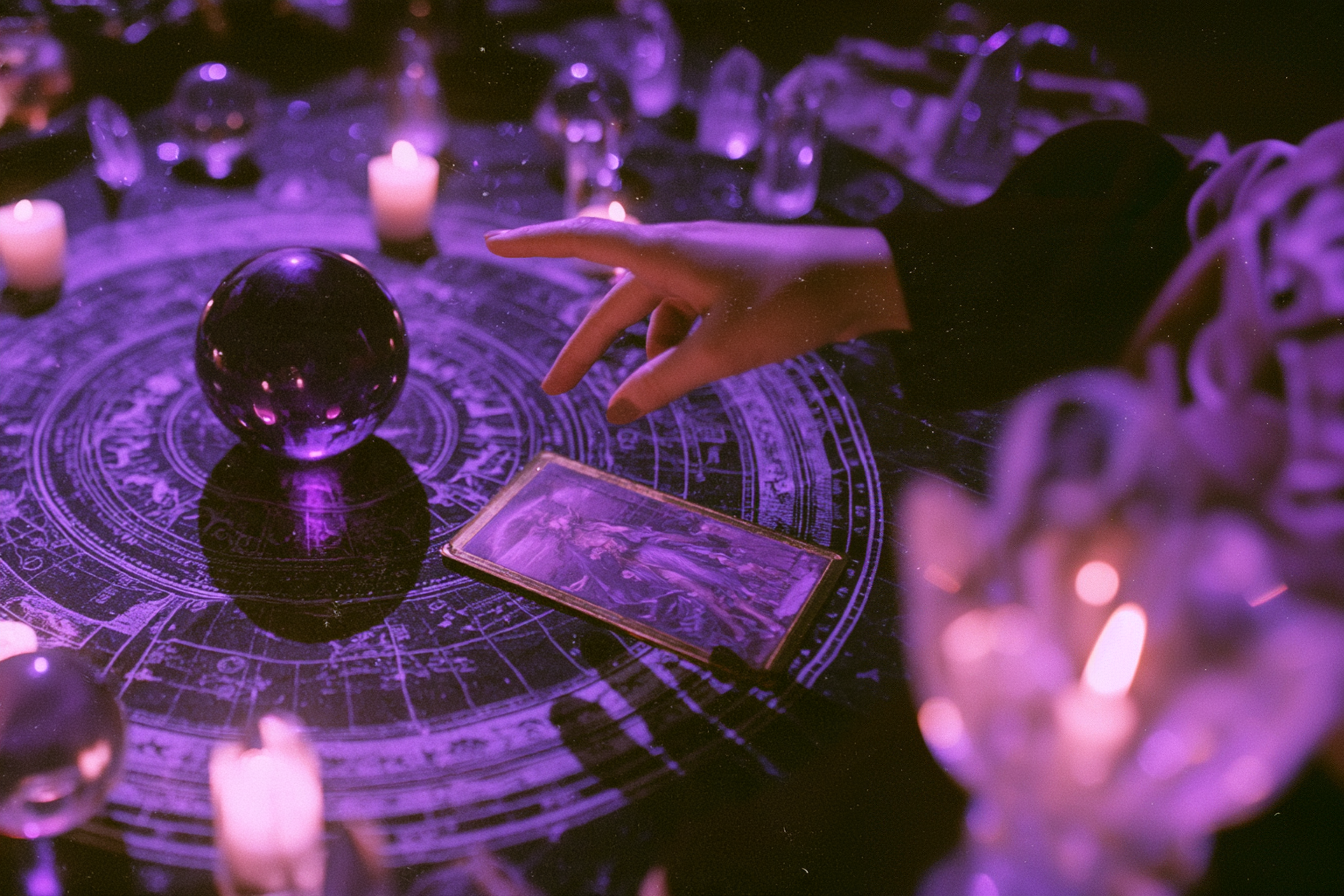
Witchcraft is the practice of working with natural forces, timing, and directed intention to create change. It is not a single religion or tradition — it encompasses folk magic, nature-based spirituality, ceremonial systems, and secular craft. What most forms share: the belief that focused intention, aligned with natural cycles and appropriate materials, can influence outcomes in the world.
- Witchcraft is a broad family of practices, not a single tradition or belief system.
- It is not inherently religious — many practitioners approach it as a craft, a philosophy, or a cultural inheritance.
- Wicca is one specific tradition within witchcraft, not the same thing as witchcraft itself.
- Modern practice centres on intention, natural timing, and personal ritual — not on any particular set of tools or beliefs.
- The most important element in any practice is the practitioner’s own understanding and consistency over time.
What Witchcraft Actually Is
At its core, witchcraft is the practice of directing intention — usually with the help of symbolic actions, natural materials, and attention to timing — in order to create a desired outcome. The specific techniques vary enormously across traditions: one practitioner might work with candle magic and moon phases; another with runes and northern folk traditions; another with plant medicine and the land they live on.
What nearly all forms share is this: a belief that focused human intention, expressed through purposeful action and aligned with natural forces, can influence events in the world. Whether that influence is understood as energetic, psychological, spiritual, or purely practical varies by tradition and by the individual practitioner.
Witchcraft is not the same thing as Wicca, Satanism, or any other specific religion. It predates all of them. It also does not require belief in magic in any supernatural sense — many contemporary practitioners approach it as a system for working with attention, symbolism, and ritual to achieve real-world aims.
A Brief History
The word “witch” derives from the Old English wicca (masculine) and wicce (feminine), meaning a practitioner of magic — though this etymology has no direct connection to the modern religion of Wicca. Forms of folk magic, herbalism, and ritual practice have existed in every culture throughout recorded history, under many names.
The association of witchcraft with evil and devil-worship was largely a medieval and early modern Christian construction, used to suppress folk practices, enforce religious orthodoxy, and persecute women — particularly healers and midwives who held community knowledge. The witch trials of the 15th through 18th centuries killed tens of thousands of people in Europe and the Americas, almost all innocent of any real practice.
Modern witchcraft as a self-identified movement began in the 20th century. Gerald Gardner brought Wicca into public view in the 1950s. The feminist spirituality movement of the 1970s reclaimed the figure of the witch as a symbol of women’s power and autonomy. Today’s practice draws on all of these threads, along with folk traditions from around the world, and continues to evolve.
What Witches Actually Believe — and What They Don’t
There is no single witchcraft creed. Practitioners hold every imaginable range of belief: from deeply religious to entirely secular, from polytheist to atheist, from duotheist (Wiccan God and Goddess) to animist (everything has spirit). Asking what witches believe is like asking what Christians believe — the category is too broad for a single answer.
Some common principles found across many traditions:
- Natural cycles matter. The moon’s phases, the turning of the seasons, and the rhythms of the earth are not just background — they are forces that the practitioner works with consciously.
- Intention shapes outcome. The clarity and quality of the practitioner’s intention is more important than any particular tool or formula.
- Responsibility is personal. Most traditions hold that what you send out returns to you, in some form. Working with intention for harm carries consequences — which is why most serious practitioners avoid it.
- The inner and outer worlds are connected. What happens in ritual space — with symbolic materials and directed intention — can influence what happens in physical reality.
The Major Traditions
Witchcraft is not monolithic. These are some of the main streams of modern practice:
What Witchcraft Practice Actually Looks Like
For most practitioners, daily practice is less dramatic than the popular image suggests. It looks like:
- Lighting a candle at the new moon and writing a clear intention
- Carrying a stone aligned with a current working
- Pulling a tarot card in the morning and observing how it plays out through the day
- Tending herbs, both practically and as a form of connection with plant spirit
- Recording workings and their outcomes in a grimoire, building a personal map of what moves and what doesn’t
- Timing significant actions with the moon’s phase
The tools — candles, stones, herbs, sigils, incense — are not the practice itself. They are symbolic anchors for intention. A skilled practitioner working with plain water and a clear focus can accomplish what a less skilled one cannot achieve with an elaborate altar.
Is Witchcraft a Religion?
Not necessarily, and this is important to understand. Some forms of witchcraft — particularly Wicca and other goddess-centred traditions — are religious in structure, with sacred texts, deity relationships, and ethical codes. Others are entirely secular.
Many practitioners describe witchcraft as a craft — a skilled practice, like brewing or weaving — that can be held by anyone regardless of their religious beliefs. There are Jewish, Christian, and Muslim witches; there are atheist and agnostic witches; there are practitioners who hold no particular label at all.
The question “is witchcraft a religion?” is a category mistake — like asking whether cooking is a religion. The craft is the craft. The beliefs surrounding it are a separate matter.
Incantara is a private practice companion for Android — built around your natal chart, the current moon phase, and your personal workings. The Witchcrafter oracle, rooted in real magical traditions, guides you through questions about your practice. Your grimoire and spell notes stay private on your device.
Get Incantara free on Android ↗Common Misconceptions
Witchcraft is not Satanism
Most witchcraft traditions have no relationship with the Christian figure of Satan. This conflation was made by the medieval Church to demonise indigenous practices and is not reflected in actual witchcraft. Satanism is its own distinct tradition with its own history and practices.
Witchcraft is not inherently dark or harmful
The majority of witchcraft practice is concerned with protection, healing, prosperity, and alignment with natural cycles — the same things most people want from their spiritual or practical lives. Like any tool, it can be misused, but harm magic is rare in practice and carries significant ethical and energetic weight.
Witchcraft is not only for women
While the contemporary revival has strong feminist roots and women are the majority of practitioners, witchcraft has always included men and, in many traditions, is not gendered at all. Historically, cunning men and wise men were as common as wise women in folk tradition.
You do not need to be initiated to practise
Some traditions — particularly Wiccan lineage traditions — involve formal initiation. But the vast majority of contemporary practitioners are self-taught and solitary. There is no gatekeeping authority for the craft.
For a practical introduction to starting your own practice, see our guide to moon phase timing for spells. For the role your birth chart plays, see using your natal chart in witchcraft.
Ask Incantara
WitchcrafterThese are the questions practitioners ask most about the nature of witchcraft. Ask the Witchcrafter in Incantara — a craft oracle rooted in real magical traditions — and get an answer tailored to your own practice and lineage.
About this guide
This guide draws on scholarship and practice across Wicca, Thelema, Hermetic Qabalah, folk witchcraft lineages, and the classical grimoire tradition. It aims to describe the breadth of practices that fall under the term witchcraft without reducing them to a single framework.