Tarot Card Meanings — Major Arcana, Minor Arcana, and How to Read Tarot
Tarot is a 78-card system of symbols drawn from medieval European imagery, Kabbalah, astrology, and alchemy — a language of archetypes that speaks directly to the unconscious. This guide covers the structure of the tarot, the meanings of the Major Arcana and four Minor Arcana suits, how to read spreads, and how to build an intuitive practice that goes beyond memorizing keyword lists.
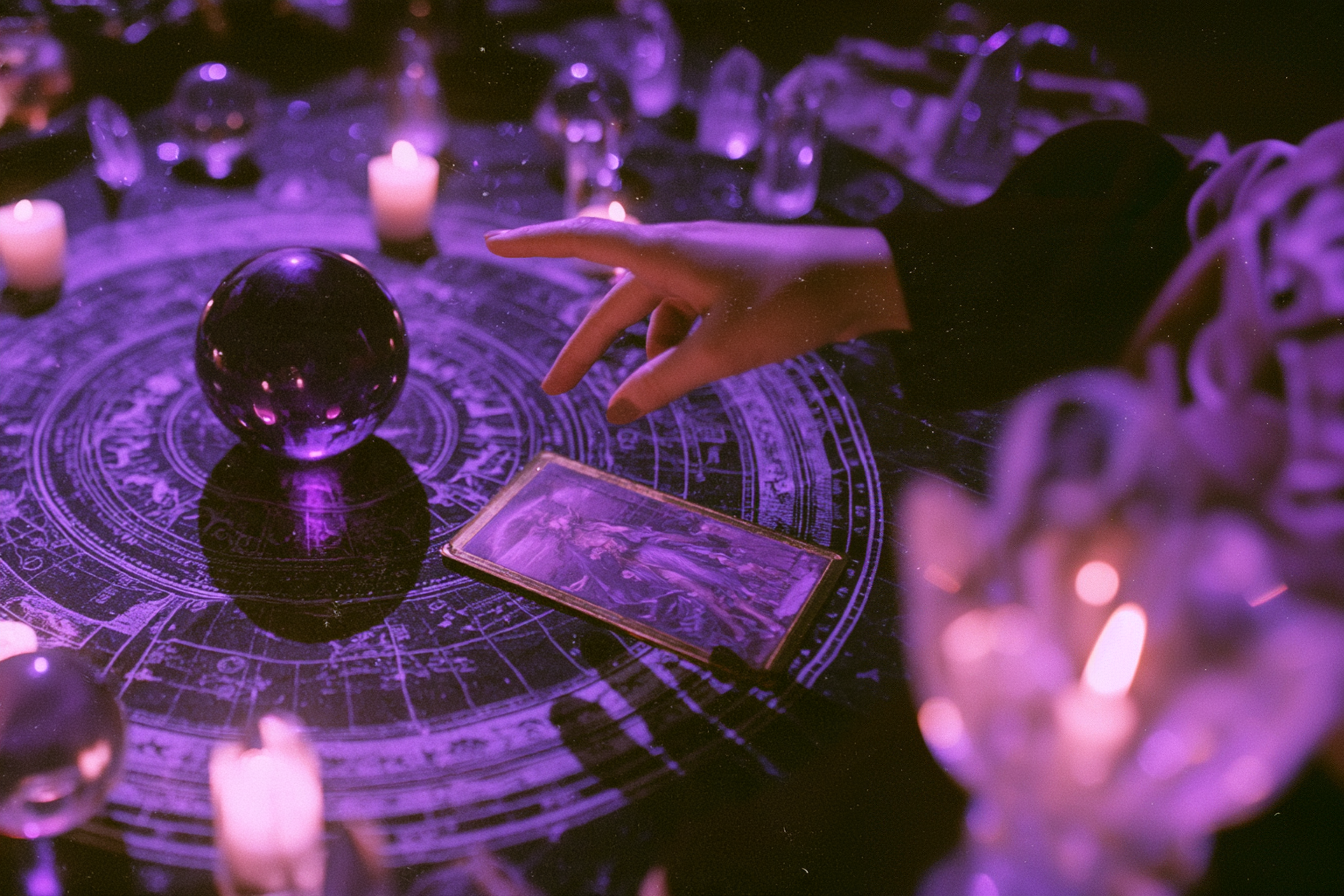
A tarot deck has 78 cards: 22 Major Arcana (archetypal life themes) and 56 Minor Arcana (everyday situations, divided into four suits). The Major Arcana runs from The Fool (new beginnings, naivety) to The World (completion, integration). The four suits are Wands (fire/passion), Cups (water/emotion), Swords (air/thought), and Pentacles (earth/material).
- 78 cards total: 22 Major Arcana + 56 Minor Arcana (4 suits of 14 cards each)
- Major Arcana represents life's major themes and soul-level lessons; Minor Arcana represents everyday situations
- Four suits correspond to four elements: Wands (Fire), Cups (Water), Swords (Air), Pentacles (Earth)
- Intuitive reading — responding to the imagery — develops over time and is ultimately more valuable than memorized meanings
The Structure of Tarot
A standard tarot deck contains 78 cards divided into two sections: the Major Arcana and the Minor Arcana. The Major Arcana (22 cards, numbered 0–21) represents the great archetypal forces and life themes — the soul's journey from naive beginnings (The Fool) through every major life experience to completion (The World). When Major Arcana cards appear prominently in a reading, they signal significant, often soul-level patterns at work.
The Minor Arcana (56 cards) represents the everyday texture of life — the situations, challenges, decisions, and energies encountered in ordinary experience. It is divided into four suits of 14 cards each: Ace through 10, plus four court cards (Page, Knight, Queen, King). The suits correspond to the four classical elements and four broad domains of life experience.
The Major Arcana — Key Meanings
| Card | Core Meaning |
|---|---|
| 0 — The Fool | New beginnings, innocence, leap of faith, spontaneity, naivety |
| I — The Magician | Will, skill, manifestation, using all available resources |
| II — The High Priestess | Intuition, mystery, the unconscious, hidden knowledge |
| III — The Empress | Fertility, abundance, nature, creativity, the divine feminine |
| IV — The Emperor | Structure, authority, stability, the divine masculine, foundation |
| V — The Hierophant | Tradition, spiritual authority, education, community, convention |
| VI — The Lovers | Choice, alignment of values, partnership, union of opposites |
| VII — The Chariot | Willpower, determination, control, victory through discipline |
| VIII — Strength | Courage, inner strength, patience, compassion overcoming force |
| IX — The Hermit | Introspection, solitude, seeking, inner guidance, withdrawal |
| X — Wheel of Fortune | Cycles, fate, turning points, the larger pattern of life |
| XI — Justice | Fairness, truth, cause and effect, karmic balance |
| XII — The Hanged Man | Suspension, surrender, new perspective, waiting, sacrifice |
| XIII — Death | Transformation, endings, transition, necessary change |
| XIV — Temperance | Balance, moderation, patience, integration of opposites |
| XV — The Devil | Shadow, bondage, materialism, addiction, what we're enslaved to |
| XVI — The Tower | Sudden change, upheaval, revelation, collapse of false structures |
| XVII — The Star | Hope, healing, renewal, spiritual guidance, calm after storm |
| XVIII — The Moon | Illusion, the unconscious, fear, dreams, the liminal |
| XIX — The Sun | Joy, vitality, clarity, success, the conscious life |
| XX — Judgement | Awakening, evaluation, calling, responding to a higher truth |
| XXI — The World | Completion, integration, fulfillment, wholeness, the journey done |
The Four Suits of the Minor Arcana
Wands (Fire). Passion, creativity, ambition, career, spiritual energy, the life force itself. Wands readings often concern work, purpose, what drives you, and where your energy is going. Conflicts in the Wands suit are often about competing passions or wasted creative force.
Cups (Water). Emotions, relationships, intuition, dreams, the inner life, the heart. Cups readings often concern love, friendship, emotional wellbeing, and intuitive knowing. The Cups suit holds the most psychic cards in the deck.
Swords (Air). Intellect, thought, communication, conflict, truth, difficulty. Swords is often called the most challenging suit — it depicts the painful truths, difficult decisions, and mental struggles of life. Swords cut through illusion but also through what we wish to hold onto. The suit of necessary honesty.
Pentacles (Earth). Material reality, money, work, the body, nature, practical concerns, what can be built and held. Pentacles readings concern finances, career in its material aspect, health, home, and long-term security.
How to Read a Tarot Spread
The most accessible spread for beginners is the three-card spread. Shuffle your deck while holding a question or intention, then draw three cards face down and turn them over left to right.
The positions can be read as: Past / Present / Future; Situation / Challenge / Advice; or Body / Mind / Spirit — choose the framing that fits your question. Read each card in the context of its position, then read the three together as a narrative.
Trust your first reaction to the imagery before consulting meanings. Notice what you feel when you see the card in context — before you think about what it's "supposed" to mean. Over time, this intuitive response becomes more reliable than keyword recall.
Incantara includes a full tarot journal — record your spreads, interpretations, and what manifested afterward. Looking back at a year of readings shows you patterns you would never see from individual sessions. Your readings stay private on your device.
Try Incantara Free →Building Your Tarot Practice
The fastest way to learn tarot is a daily one-card draw. Each morning, draw one card, write a brief note about its meaning and what it might be pointing to in your day. Each evening, write a brief note about what actually happened. Over weeks, the cards begin to speak more directly — not because you memorized more keywords, but because you learned the cards through lived experience.
The Rider-Waite-Smith (RWS) deck is universally recommended for learning because all 78 cards feature fully illustrated scenes. The imagery tells the story without words — which is how the intuitive read develops.
Keep a tarot journal religiously. The journals of beginning readers are often their most valuable magical records — they document the development of a new language of inner life.
Frequently Asked Questions
Common questions about tarot card meanings and reading practice.