Hermetic Qabalah and the Tree of Life — A Practical Introduction
If you've spent time with Western ceremonial magic, Thelema, or the deeper layers of modern witchcraft, you've encountered the Tree of Life — usually as a diagram of ten spheres connected by paths, labelled with Hebrew names. What you may not have encountered is a clear explanation of what it actually is, what each sphere means in practice, and why the system became the central organising structure of Western esoteric tradition for over four centuries.
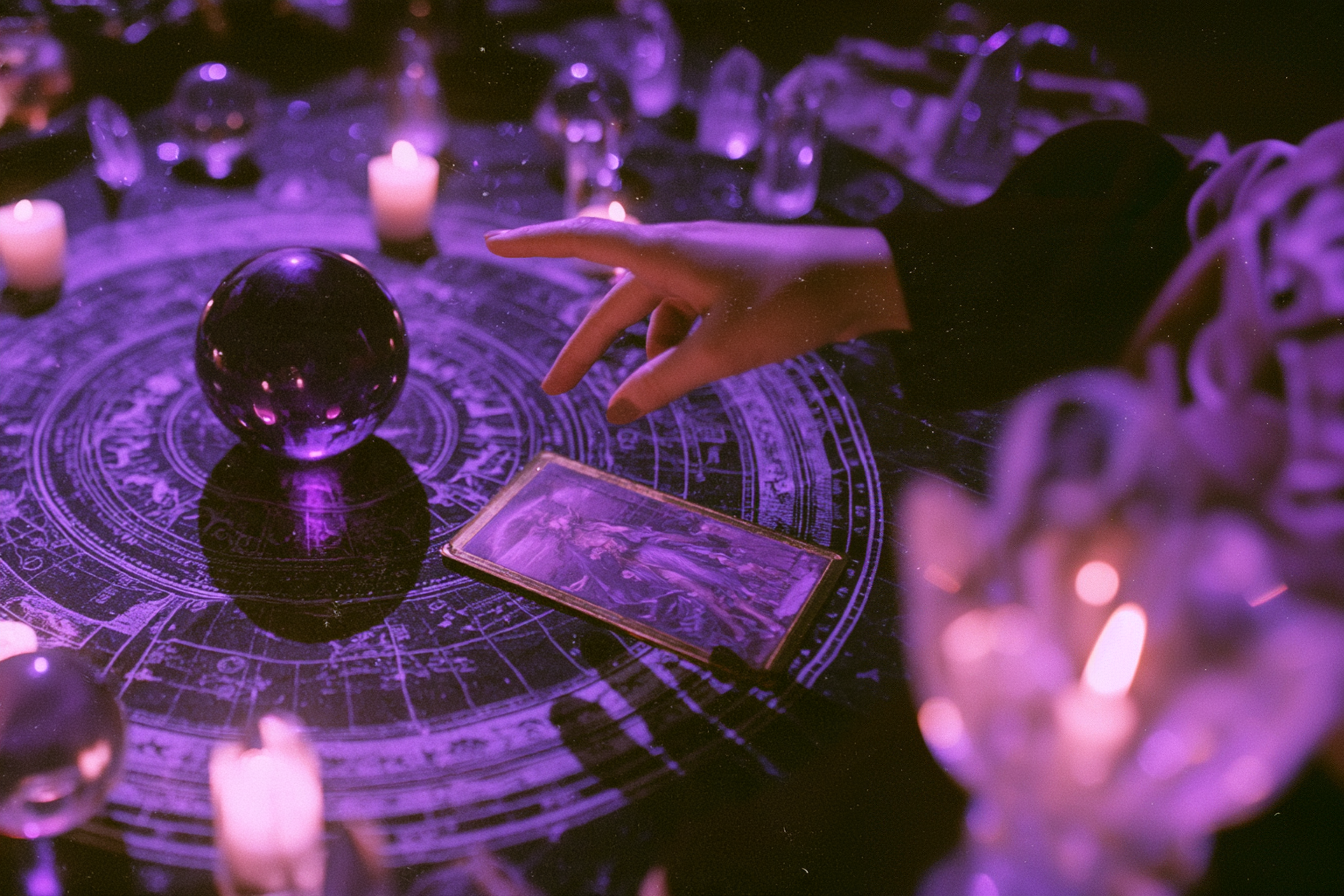
Hermetic Qabalah is a Western esoteric tradition that adapted Jewish Kabbalah into a universal system of magical correspondences. Its central diagram — the Tree of Life — maps ten aspects of reality (the Sephiroth) connected by 22 paths, each corresponding to Hebrew letters, planets, Tarot cards, deities, colours, and more. The Tree functions simultaneously as a cosmological map, an initiatory ladder, and a filing system for all magical knowledge. Understanding it unlocks the logic behind most Western ceremonial practice.
What Is Hermetic Qabalah?
Jewish Kabbalah is a tradition of Jewish mysticism — an attempt to understand the nature of God, creation, and the human soul through meditation on the Hebrew scriptures, particularly the Torah. It has roots in the Talmudic period but was systematised in medieval Provence and Spain, reaching its greatest expression in the Zohar (13th century).
Hermetic Qabalah is not Jewish Kabbalah. It is a separate tradition that adapted the Kabbalistic framework — particularly the Tree of Life — into a universal esoteric system without theological commitment to Judaism. This adaptation began in the Renaissance, when Christian scholars encountered Kabbalistic texts and saw in them confirmation of Neoplatonist philosophy, Hermeticism, and Christian mystical theology. They blended these together into what is sometimes called the Christian Kabbalah of the Renaissance — the foundation of Hermetic Qabalah.
The Golden Dawn tradition of the late 19th century created the most comprehensive synthesis: a complete initiatory system built on the Tree of Life, drawing on Kabbalah, Hermeticism, astrology, Tarot, Enochian magic, Egyptian mythology, and alchemy. The Golden Dawn system became the foundation for Thelema, modern Wicca (through its ceremonial influences), and virtually all subsequent Western magical traditions.
Spelling note: "Kabbalah" typically refers to Jewish mysticism. "Qabalah" or "Qabala" refers to the Hermetic adaptation. "Cabala" is sometimes used for the Christian Renaissance version. All three share the same root — the Hebrew word meaning "received" or "that which is received" — but the traditions are distinct.
The Tree of Life: Structure
The Tree of Life is a diagram of ten spheres (Sephiroth) arranged on three vertical columns, connected by 22 paths. The structure corresponds to the ten digits and 22 letters of the Hebrew alphabet — a total of 32 paths of wisdom, which give the system its internal numerical coherence.
The three columns represent three principles:
- The Pillar of Severity (left column) — restriction, form, the feminine in its limiting aspect
- The Pillar of Mercy (right column) — expansion, force, the masculine in its expansive aspect
- The Pillar of Equilibrium (middle column) — the balance between force and form, the path of the practitioner
Reading from top to bottom, the Tree moves from pure undifferentiated being to the material world. Reading from bottom to top, it traces the initiatory path — the practitioner's journey from ordinary consciousness toward higher states.
The Ten Sephiroth
The Abyss and Da'ath
Between the upper three Sephiroth (the Supernal Triangle: Kether, Chokmah, Binah) and the lower seven, there is a gap called the Abyss. The Abyss separates the universal from the individual — the first three Sephiroth represent aspects of the divine that are genuinely beyond personal consciousness, while the lower seven are aspects a practitioner can relate to and develop through.
Da'ath, sometimes called the "invisible Sephirah," sits at the centre of the Abyss. It is the point of Knowledge — but Knowledge here means direct, non-dual understanding rather than intellectual knowing. It is not placed on the Tree because it is not a Sephirah in the same sense; it is a point of passage that cannot be assigned a number without distorting the structure.
In Thelemic terms, the Abyss is crossed only at the final stages of the Great Work — the act called the Crossing of the Abyss that follows attainment at Tiphareth. It is the subject of some of the most difficult and demanding magical literature in the Western tradition.
The 22 Paths
The 22 paths connecting the Sephiroth correspond to the 22 letters of the Hebrew alphabet, each of which has its own set of correspondences. The Golden Dawn tradition developed a comprehensive system of Tarot correspondences: the 22 Major Arcana cards map onto the 22 paths, so the entire Tarot (minus the Minor Arcana) becomes a navigational tool for moving between Sephiroth.
Using the paths in practice
Path working is a form of extended visualisation or astral projection in which the practitioner moves along a specific path of the Tree, encountering its characteristic symbols, images, and forces. A path working on Path 32 — connecting Malkuth to Yesod, corresponding to the World card — might involve a journey upward through elemental forces into the astral plane.
Each path has:
- A Hebrew letter and its associated symbolism
- A Tarot Major Arcana card
- An astrological correspondence (planet or zodiac sign)
- Characteristic imagery and encounters
- An elemental or divine quality to be absorbed
Path working in this sense is distinct from Sephirotic work: the Sephiroth are states; the paths are transitions between states.
The Four Worlds
Hermetic Qabalah inherits from Jewish Kabbalah the concept of four worlds — four levels of reality through which creation manifests. Each world contains its own version of the entire Tree of Life, so the system has a fractal quality: the macrocosm and the microcosm mirror each other at every scale.
Atziluth, Beriah, Yetzirah, Assiah
- Atziluth (Emanation) — the world of pure archetypes, closest to the divine source; in practice, the level at which divine names and principles operate
- Beriah (Creation) — the world of the archangels and pure concept; where archetypes begin to differentiate into forms
- Yetzirah (Formation) — the world of angels and the astral; where forms are shaped before physical manifestation
- Assiah (Action) — the physical world; the planet Earth; the level at which Malkuth fully manifests
Practical magic typically operates in Yetzirah — the astral world — using the correspondences of that world (visualisation, symbolic gesture, language) to affect Assiah below and reach toward Beriah above.
The Tree as a Correspondence System
The practical utility of the Tree for magical work lies in its function as a universal filing system. Every element of the Western magical universe has a Sephirotic placement — which means every element has a set of related elements that can be used to amplify or focus a working.
Working with the energy of Venus means working with Netzach: the number 7, the colour emerald green, copper, rose incense, roses and myrtle, the Greek goddess Aphrodite and the Egyptian Hathor, the Empress of the Tarot. All of these elements are "Netzachian" — they resonate with the same frequency. Building a working from them creates a coherent signal rather than a confused one.
This is the core logic behind ceremonial magic: not arbitrary ritual, but the deliberate construction of a correspondential environment that focuses the practitioner's attention and intention on a specific aspect of reality.
Qabalah in Incantara
Incantara's knowledge base includes Hermetic Qabalah and its major traditions — the Golden Dawn system, Thelema, and the correspondence tables that link the Tree to planetary, elemental, and divine forces. The Witchcrafter, guided by real magical traditions, can help practitioners apply Qabalistic correspondences to working design, understand the placement of forces within the Tree, and work with the structure as a living initiatory map rather than an abstract diagram.
Incantara also covers the astrological correspondences that are fundamental to Qabalistic practice — the planets map directly onto the Sephiroth, and understanding both systems together is essential for ceremonial work.