Black Magic — What It Actually Is and What It Isn't
The term "black magic" appears in every conversation about the occult, and almost every use of it is imprecise. Depending on who is speaking, it means harmful magic, transgressive magic, left-hand path practice, or simply magic that religious authorities disapprove of. Understanding what it actually means — across the traditions that use it seriously — requires setting aside the horror-film version and looking at what practitioners themselves say.
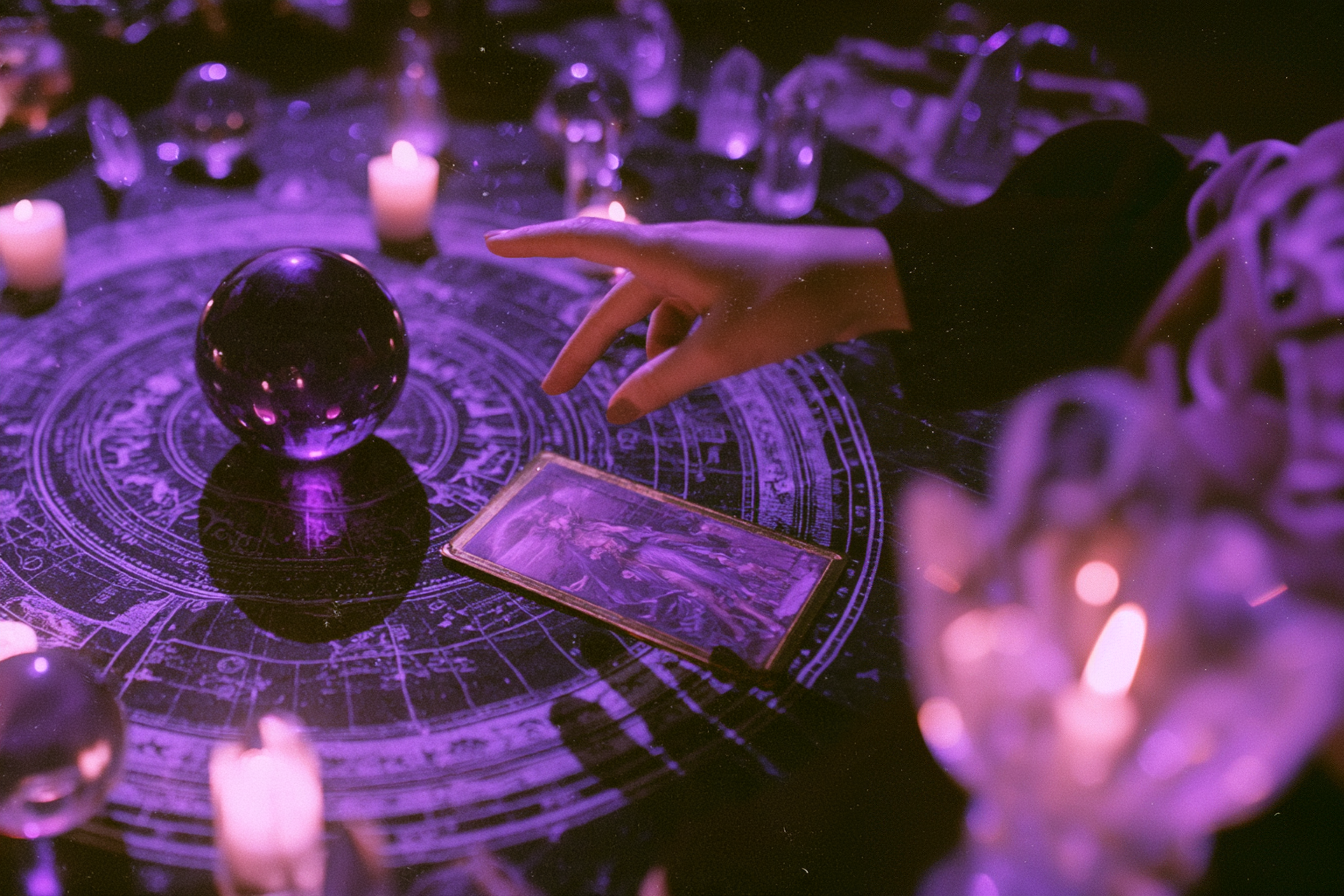
"Black magic" has no single definition that holds across all traditions. In the left-hand path, it refers to practices centred on individual will, transgression, and self-deification — not harm. In folk traditions, it describes workings intended to cause misfortune. In Thelema, the word "black" in a magical context often refers to the absorption of all, as in a Black Brother — a very specific initiatory concept. The term is a label applied from outside as often as it is chosen from within.
Where the Term Comes From
The white/black distinction in magic has roots in medieval Christian theology, which divided supernatural power into divine (white) and demonic (black). This framework mapped easily onto existing colour symbolism — light/dark, day/night, heavenly/infernal — and produced a moral binary that has shaped popular understanding ever since.
What it missed was everything that didn't fit the binary. Folk traditions across Europe, Africa, and the Americas had been practising for centuries without this framework. A herbalist who could heal could usually also curse. A worker who protected the household could also harm enemies. The same practitioner, the same craft — the direction of the working was determined by need and context, not by a fixed moral category.
The modern usage inherits this confusion. When someone searches for "black magic", they might be looking for anything from actual harmful practice, to left-hand path philosophy, to Thelema, to protection against perceived spiritual attack. These are very different things, and understanding the difference matters.
The Left-Hand Path
The most coherent framework for what serious practitioners mean by "dark" or "black" magic is the left-hand path / right-hand path distinction, which comes originally from Indian Tantra.
In Tantric practice, the right-hand path (Dakshinachara) follows conventional ritual within sanctioned forms. The left-hand path (Vamachara) uses transgression as a spiritual instrument — breaking ritual taboos to transcend them. Both paths work within a sophisticated theological framework; one is not more dangerous or morally inferior than the other.
Western occultism adopted this framework in the 19th and 20th centuries, and it took on a different shape. The right-hand path became associated with working toward union with a higher power, submission to divine will, and ethical constraint. The left-hand path became associated with self-deification, the assertion of individual will, and working outside the norms of mainstream spiritual frameworks.
What it actually emphasises
- Self-deification — the practitioner as the centre and source of magical authority, not a vehicle for external divine will
- Transgression as method — moving through taboo rather than around it, using the charge of what is forbidden as fuel for transformation
- Individual sovereignty — ethics determined by the practitioner's own understanding, not by inherited moral frameworks
- Results orientation — interest in what actually works, regardless of whether it fits a particular tradition's approved methods
This is not the same as "harming people is acceptable". Left-hand path practitioners have ethics — they are simply not the ethics imposed by mainstream religion.
Thelema and "Black" Magic
Thelema is probably the most sophisticated Western magical tradition associated with the left-hand path, and it has an unusually precise relationship with the word "black" — which does not mean what outsiders typically assume.
In Thelemic cosmology, the "Black Brothers" are initiates who, at a critical stage of the Great Work, refuse to give themselves entirely to the process. They cling to their individual identity rather than allowing it to dissolve into what the system calls the City of Pyramids. This makes them "black" in the sense of absorption — holding everything in, refusing to radiate. It is a specific initiatory failure, not a category of practice.
The core ethical principle of Thelema — "Do what thou wilt shall be the whole of the Law" — is frequently misread as moral relativism or permission to harm. What it actually means is that discovering and enacting one's True Will (one's deepest authentic purpose, not one's surface desires) is the whole of one's obligation. Working against another's Will is as much a violation as working against your own.
On "Do what thou wilt": The second half of the law is usually omitted from popular references: "Love is the law, love under will." The system is not simply about individual licence — it is about the alignment of will and love as the basis for all action.
Curses, Hexes, and Binding — The Folk Tradition
Separate from philosophical frameworks, there is a long and widespread folk practice of magic intended to cause misfortune, harm, or constraint. This exists across virtually every culture that has a magical tradition.
Different traditions take very different ethical positions on these workings. Wicca, particularly Wiccan traditions following the Rede and the Rule of Three, generally prohibits harmful magic. Other traditions — including much of Hoodoo, Thelema, and various European folk traditions — take a more pragmatic view: harm done by magical means is subject to the same ethical evaluation as harm done by any other means. It is not automatically prohibited, and it is not automatically sanctioned.
What Gets Labelled "Black Magic" That Isn't Harmful
Historically, "black magic" has been applied to practices that threatened established power — not practices that actually harmed people. The label was used to suppress:
- Folk healing traditions that competed with or predated Christian practice
- African and Indigenous spiritual practices, particularly during colonisation
- Any magic practised by marginalised groups — women, the poor, racial minorities
- Traditions that acknowledged underworld, chthonic, or shadow forces as legitimate
This context matters. A tradition that has been labelled "black magic" by its opponents is not necessarily a tradition that causes harm. The label reflects the politics of its era as much as anything else.
Dark Magic vs. Harmful Magic
Serious practitioners make a distinction between dark and harmful. Dark magic engages with shadow, transgression, chthonic forces, death, and the parts of experience that are hidden or socially forbidden. It does not automatically involve harm.
A working for personal transformation through difficulty, an initiation that involves confronting one's own death, a ritual that calls on underworld forces for wisdom — these are dark in the traditional sense. They work in the same territory as grief, loss, and the night. They are not harmful.
Harmful magic is magic directed specifically at causing suffering, illness, or misfortune for someone else. The ethics of this — when it is ever justified, what the consequences are, how it relates to the practitioner's own development — is a question each tradition answers differently. It is a live question in serious practice, not a simple prohibition or a simple permission.
Incantara's Approach
Incantara's knowledge base is drawn from real magical traditions — including Thelema, ceremonial magic, chaos magic, and folk witchcraft — guided by the actual texts and practices of those traditions. It does not flatten these into a generic "white magic" framework, and it does not add moral warnings that don't exist in the traditions themselves.
Practitioners working in left-hand path or Thelemic frameworks will find that Incantara engages with those frameworks as they actually are, rather than as a sanitised version. The sigil creation tools and working structure support the full range of serious magical practice.